
us_flag US EN Vector (9)
Locate Providers icon_chat_whiteChat Inspired By Drive

NexStride

The Cueing Device That Gets Patients Moving with Confidence
NexStride_Header
NexStride_Mobile_Header

A Laser Line and a Beat.

That's all it takes to change how a patient walks out of your store.

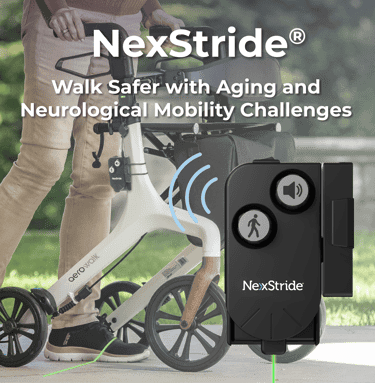
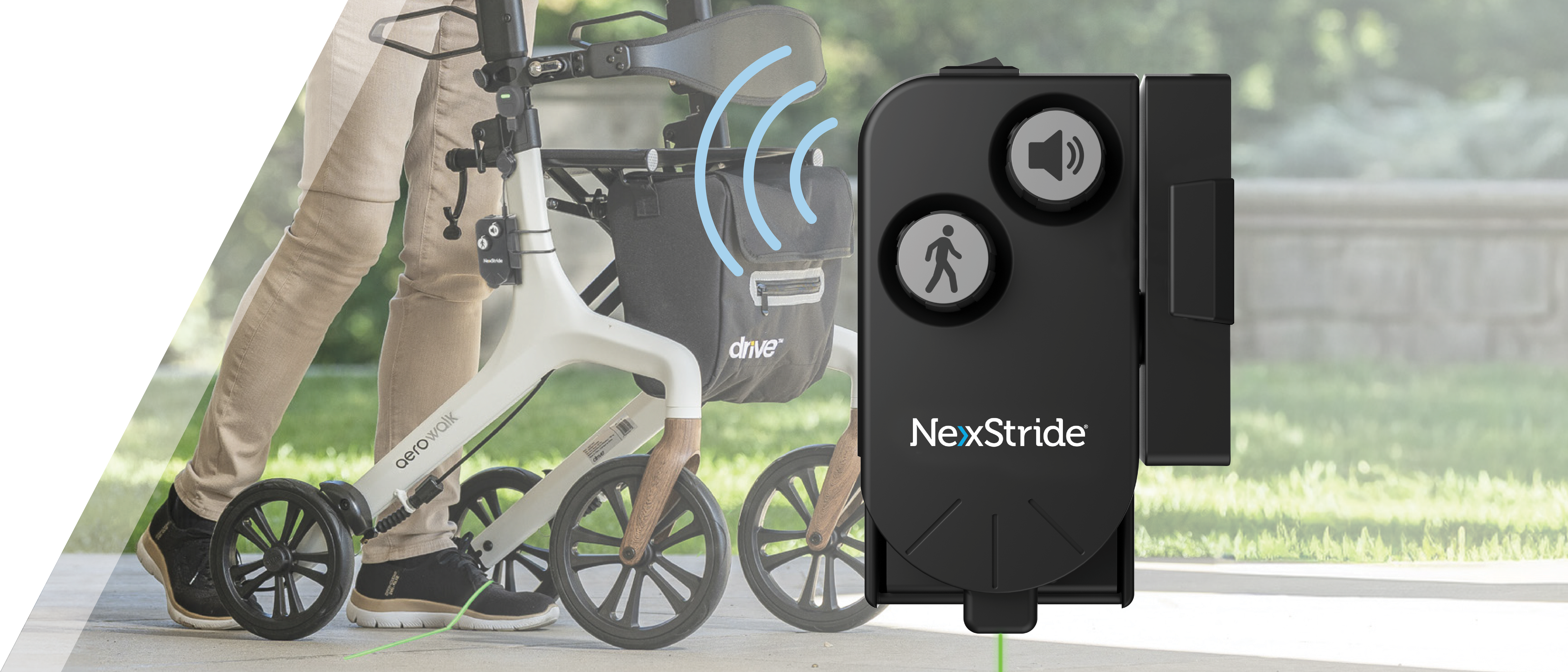
NexStride is a cueing device that attaches to a cane, walker, rollator, or trekking pole in seconds. It supports some of your highest-need patients — those experiencing mobility challenges such as those related to Parkinson's, stroke, MS — with something most providers don't have on the floor: a research-backed device built specifically for gait support. It's a high-margin add-on to a fitting you're already doing.

Backed By Science. Trusted by Users & Clinicians.

Full NexStride Render (3) (1)

Parkinson's Disease
NexStride’s cues have been shown to reduce falls by up to 40%.* Clinical studies show improvement in gait freezing and walking confidence for people with Parkinson's.**

*Donovan et al., Parkinsonism Relat Disord, 2011.

Stroke Recovery
Larger strides and faster walking speed. Studies on cueing techniques show they can support smoother walking and more consistent step patterns. Individual results may vary.

Gait Disorders
Visual and auditory cues can provide additional support and stability for users experiencing mobility challenges, including those with conditions such as Parkinson’s, Multiple Sclerosis, stroke, or other neuromobility difficulties.

Full NexStride Render (3) (1)
Walkwise_LP_wheel_phone_v3-3

Why Offer NexStride?

Brain_Icon

Supports a Range of Challenges

Provides additional support and stability for users experiencing mobility challenges, including those with conditions such as Parkinson's, Multiple Sclerosis, stroke, or other neuromobility difficulties.

ToolFree_Icon

Seconds to Attach,
No Tools

Clips directly onto mobility aids your customers already use — no separate fitting, no new sizing process.


Walk_Icon

Works With What
You Sell

One device is compatible across your cane, walker, rollator, and trekking pole lines.


Nexstride2

The High-Impact Add-On Neurological Patients Want

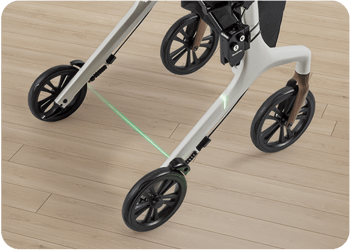
NexStride is the only walking assistance device that attaches to canes, walking poles, walkers and rollators that combines laser visual cues with rhythmic auditory beats to help users manage gait initiation challenges and maintain a steady walking pattern.


Researched-Backed Results

The benefits of visual and auditory cues are supported by over 100 peer-reviewed published research articles in leading journals, including Movement Disorders, Journal of the Neurological Sciences, Neurorehabilitation and Neural Repair, Parkinsonism & Related Disorders, and Neuropsychologia.

*Individual experiences and study outcomes may differ; claims are based on available research and user feedback.

Nexstride1

The High-Impact Add-On Neurological Patients Want

Nexstride2

NexStride is the only walking assistance device that attaches to canes, walking poles, walkers and rollators that combines laser visual cues with rhythmic auditory beats to help users manage gait initiation challenges and maintain a steady walking pattern.


Researched-Backed Results

Nexstride1

The benefits of visual and auditory cues are supported by over 100 peer-reviewed published research articles in leading journals, including Movement Disorders, Journal of the Neurological Sciences, Neurorehabilitation and Neural Repair, Parkinsonism & Related Disorders, and Neuropsychologia.

*Individual experiences and study outcomes may differ; claims are based on available research and user feedback.

Users & Physical Therapists Recommend NexStride

“The first time I used NexStride, it was amazing.  The laser light went on and it was like a 'go' signal - I just stepped over it.  Your independence is back.  A little but back... but it's back!” 

- Earl S. - Verified User

"The NexStride cueing device has clear added benefit for patients with gait disorders diagnosed with Parkinson's, as well as stroke, verstibular dysfunction, brain unjury and a range of other conditions.

- Maria A. Physical Therapist

User Stories

Sheldon
“It’s helping me to relax a bit as I walk. It keeps me going and it makes me feel like I’m in control.”

Barbara
“NexStride really gives me a lot of confidence in times when I wouldn't be able to leave the house, or go for an extended walk." 

Walter
“I wouldn’t have been able to do any of the things I want to do without NexStride…it comes down to either being in a wheelchair or using NexStride."

DME's Frequently Asked Questions

How does it work? 

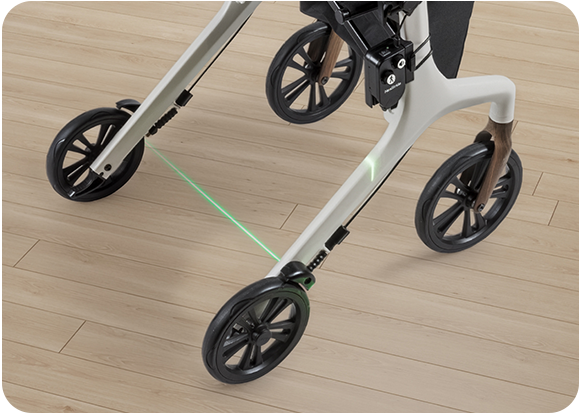
NexStride clips onto a patient's existing cane, walker, rollator, or trekking pole and delivers a laser visual cue and an audio metronome cue at the same time, giving the patient a target for step length and a rhythm for step timing. 


How does each type of cue work? 

Audible Metronome: NexStride’s metronome emits an audible signal, engaging a different pathway in your brain to enable you to move forward. You step to the beat of the metronome. It guides your walking speed.

Visual Laser Line: The laser signal shows you where to step, giving your brain a target to focus on and a new way to engage with the body (this can also help correct stride issues). It guides your step length.


Which customers has research shown may benefit from these cues? 

Research has shown that NexStride’s visual and auditory cues can benefit people with mobility impairments from Parkinson’s, Stroke, Cerebral Palsy, Multiple Sclerosis, Progressive Supranuclear Palsy, as well as people who are not diagnosed with any neuromobility disorder. If you have questions about whether NexStride will benefit you, it is best to speak to your physical therapist or doctor about your specific situation. Individual experiences may vary.


What types of mobility aids does it work with? 

NexStride is compatible with most canes, walkers, rollators, and even trekking poles, allowing you to offer it to a wide variety of mobility aid users


Can NexStride be used in physical therapy sessions? 

Absolutely! Most physical therapists are already familiar with these visual and auditory cues and help individuals get set up with them.


*NexStride is an assistive mobility aid. It does not cure, prevent, or treat any medical condition or disease. It is not a substitute for professional medical advice or therapy. Consult a healthcare professional before use. Individual experiences and study outcomes may differ; claims are based on available research and user feedback. ¹ Donovan et al., Parkinsonism & Related Disorders, 2011 — cueing shown to reduce falls by up to 40% in people with Parkinson's disease.